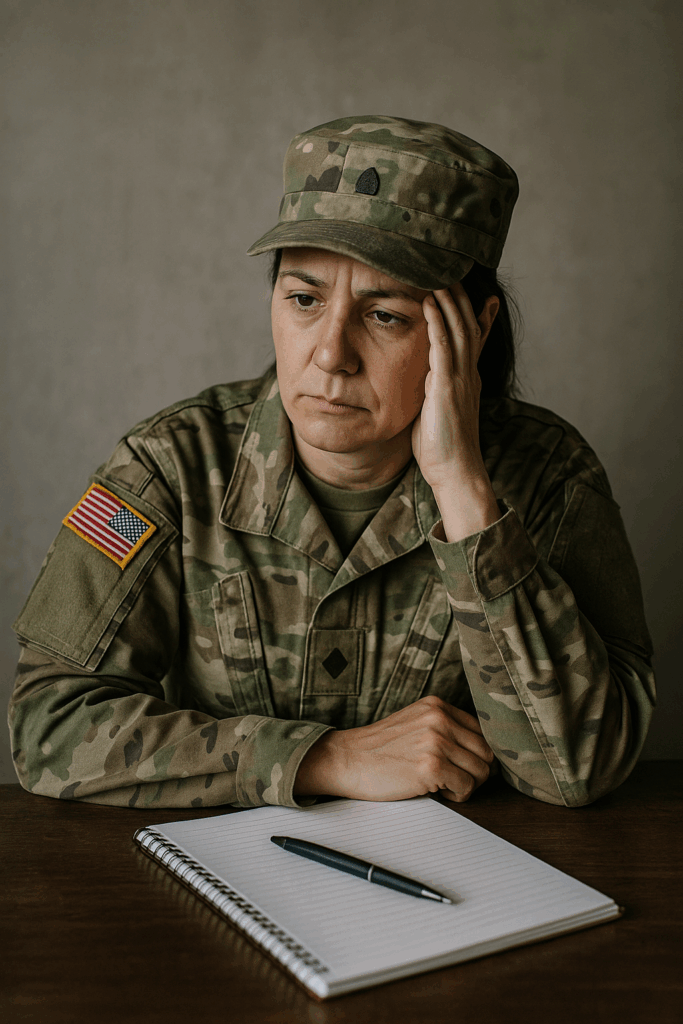
Applying for Total Disability based on Individual Unemployability (TDIU) is often one of the most important steps a veteran can take when their service-connected disabilities prevent them from maintaining full-time work. But many veterans are shocked when the VA denies their TDIU claim — even when they believe the evidence is clear.
The good news: most denials follow predictable patterns, and almost all of them can be countered with strong vocational evidence that connects a veteran’s real-world limitations to their inability to maintain substantially gainful employment.
At TDIU Expert, we help veterans bridge this gap. Below are the most common reasons the VA denies TDIU — and how to overcome them effectively.
1. “The Veteran Can Perform Sedentary Work”
One of the most frequent denial reasons is the VA’s assumption that a veteran who can’t do physical labor can still perform “sedentary” work (desk jobs, administrative positions, phone-based work, etc.).
Why This Is a Problem:
The VA rarely defines what sedentary work requires in practice. Sitting at a desk all day is not the easy option the VA makes it sound like. Sedentary jobs still require:
- Consistent attendance
- Concentration and focus
- Use of hands and arms for typing
- Minimal unscheduled breaks
- Ability to sit for prolonged periods
- Low pain and low fatigue
- Reliable pace and productivity
- Social interaction with coworkers or the public
How to Counter This:
A vocational expert (VE) will evaluate whether your service-connected disabilities allow you to meet the actual requirements of sedentary work. A VE’s report can prove:
- You cannot sit for prolonged periods without breaks
- Pain, fatigue, PTSD, migraines, or medication side-effects disrupt concentration
- You cannot maintain a reliable work pace or consistent attendance
- Social or cognitive impairments limit your ability to interact or focus
- Sedentary jobs require more than the VA assumes
Result: The VE connects your functional limitations to the true demands of sedentary employment — often showing that even desk work is not realistic.
2. Lack of Detailed Work History or Functional Limitations
Many veterans submit strong medical records but fail to connect those medical conditions to how they limit work activity.
Why This Leads to Denial:
Medical records alone don’t explain:
- Why you had to leave your job
- How symptoms affect attendance or reliability
- Why part-time or modified work wasn’t possible
- Why your past skills aren’t transferable to lighter work
How to Counter This:
A VE evaluates:
- Your complete work history
- Transferable skills
- Education and training
- Whether any past skills transfer to other jobs
- Whether any job exists that fits your restrictions
A VE report fills in the missing connection between medical limitations and vocational disability, giving the VA a clear explanation of why you cannot work in any substantially gainful occupation.
3. VA Claims You Can Do “Marginal” or “Part-Time” Work
Some denials state that a veteran can perform part-time, casual, or “less demanding” work.
Why This Is Incorrect:
TDIU is based on whether a veteran can maintain substantially gainful employment — not odd jobs, gig work, or irregular part-time work.
Part-time work does not disqualify a veteran from TDIU.
Marginal employment also does not disqualify a veteran.
How to Counter This:
A vocational expert will:
- Clarify whether your work history consists of marginal or sheltered employment
- Show that your earnings fall below the poverty threshold (if applicable)
- Explain that part-time work does not equate to competitive workplace capacity
- Document that you cannot meet full-time work requirements
A VE’s analysis makes it clear that sporadic or part-time jobs do not demonstrate employability.
4. The VA Blames Non-Service-Connected Conditions
Many denial letters argue that the veteran’s inability to work is caused by non-service-connected issues — such as age, arthritis, unrelated mental health issues, or injuries not tied to service.
Why This Happens:
The VA cannot legally consider age or non-service-connected disabilities when evaluating TDIU — but raters sometimes struggle to separate overlapping conditions.
How to Counter This:
A vocational expert:
- Focuses only on your service-connected conditions
- Uses functional analysis to isolate limitations tied to those conditions
- Demonstrates how your ratable disabilities alone prevent gainful employment
This ensures the VA cannot dismiss your claim by pointing to unrelated health issues.
5. The VA Claims Your Conditions Do Not Impact “Functional Capacity”
This denial happens when the VA acknowledges your service-connected disability but argues it does not significantly impair:
- Concentration
- Social interaction
- Pace
- Attendance
- Physical functioning
- Ability to learn or apply skills
How to Counter This:
A VE evaluates how your conditions affect:
- Standing, sitting, lifting
- Reaching, typing, gripping
- Concentration, memory, and task persistence
- Reliability and attendance
- Stress tolerance and interaction
- Ability to maintain pace or productivity standards
Vocational evidence shows the VA exactly how your limitations translate into workplace barriers.
6. Missing or Weak Supporting Evidence
Some veterans assume the VA will “understand” their limitations without detailed documentation.
This leads to denials when the VA says:
- No vocational evidence
- No clear link between conditions and work inability
- No work-impact evidence
- No medical notes documenting functional impairment
How to Counter This:
A VE helps gather or request:
- Work history summary
- Medical notes referencing functional restrictions
- Statements from former employers
- Lay statements about daily limitations
- Symptom diaries
- Treatment records
- Prior job accommodations
This creates a complete evidentiary record supporting unemployability.
7. The VA Believes You Should Be Able to Adjust to a New Type of Work
Another common denial reason:
“You can transition to another field using your transferable skills.”
This is often incorrect.
Why?
Many service-connected limitations eliminate even “light duty” or “sedentary” options.
How to Counter This:
A VE conducts a Transferable Skills Analysis (TSA):
- Reviews your work history
- Identifies all skills gained
- Evaluates whether those skills apply to other jobs
- Compares your skills with the functional requirements of alternative occupations
Most of the time, service-connected limitations eliminate the types of jobs that would otherwise match a veteran’s skills.
The VE clearly shows that no realistic, competitive, gainful jobs exist that match both your skills and your limitations.
Why a Vocational Expert Is the Key to Overturning TDIU Denials
A TDIU denial doesn’t mean the end of your claim — but it does mean you need stronger, clearer, more targeted evidence.
A vocational expert provides:
- Functional limitations analysis
- Work history analysis
- Transferable skills evaluation
- Labor-market research
- An expert opinion connecting your limitations to unemployability
This is exactly the evidence the VA often lacks when it denies a claim the first time.
Final Thoughts
TDIU claims are often denied not because the veteran isn’t unemployable — but because the VA doesn’t have the full picture. By presenting vocational evidence, you connect your service-connected disabilities to your real-world inability to maintain substantially gainful employment.
If your TDIU claim was denied — or if you want to strengthen your case before submission — TDIU Expert is here to help.
We provide independent vocational assessments that translate your medical limitations into clear, compelling evidence the VA must consider.